Specifying a visual ear cleaner that does not come back
A visual ear cleaner is a camera, a light, a Wi-Fi or wired link and an app. Every one of those four can fail, and the failure the customer notices first is always the app.
This is what to verify before committing to a model, in the order that saves the most money.
Resolution is not image quality
Listings advertise 1080P, 5MP, even 10MP. What the user sees is decided by the sensor, the lens and the focal length together, and by how close the tip can get to the ear canal wall.
- Focus distance — a camera focused at 15 mm is useless inside an ear. Ask for the working focus range, not the resolution.
- Light — six LEDs around the lens is standard. Uneven light is what makes the image look cheap, not the pixel count.
- Frame rate over Wi-Fi — a 1080P stream that lags is worse than a smooth 720P stream. Ask for the frame rate the app actually receives.
Tips: the part that touches the customer
- Material — soft silicone is the default; the question is whether it is medical-grade and whether it can be cleaned without degrading.
- Fit — a tip that detaches inside the ear is a safety incident. Push-fit tips need a retention lip, and this is worth checking on the sample physically.
- Spares — including two spare tips in the box costs almost nothing and removes a whole category of complaint.
App support is the real product
The hardware is commoditised. Differentiation lives in the app: whether it installs on current iOS and Android, whether it still installs in two years, and whether the listing page has to explain a workaround.
| Question | Why it matters |
|---|---|
| Which app, and who publishes it? | If the app is published by an unknown third party, it can disappear |
| Does it require location permission? | Android requires it for Wi-Fi scanning; buyers complain about it |
| Is there an English manual in-app? | Support load drops sharply when there is |
| Can the app record video? | Recording is the feature buyers show friends — it drives word of mouth |
Battery, screens and the screen version
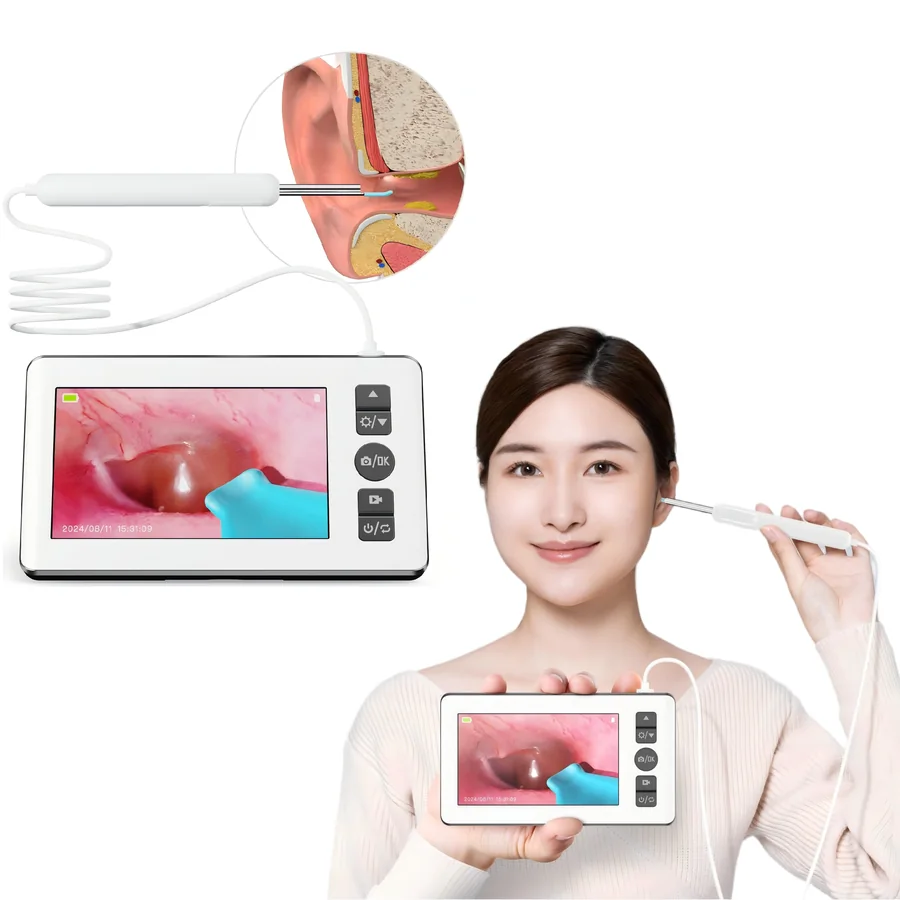
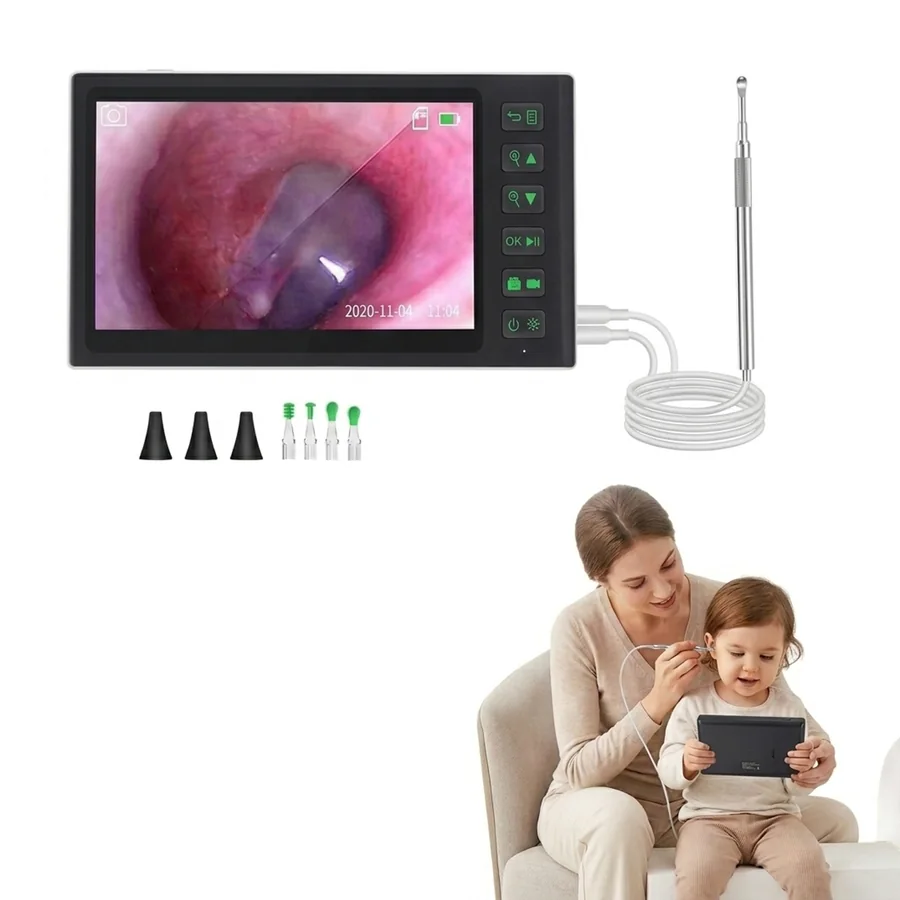
Screen-equipped cleaners remove the phone from the loop, which is a genuine advantage for older users and for gifting. The trade-off is a bigger housing, a heavier device and a higher unit price.
- Wired versions are cheaper and never lose connection, but the cable is the first thing to break.
- Screen versions suit retail and gifting; phone-app versions suit marketplaces where the buyer already reads reviews and expects an app.
- Battery life of 60–90 minutes of continuous use is normal; anything claiming several hours is quoting standby time.
Questions we get on this
Is a visual ear cleaner safe?
What resolution should I specify?
Do these need certification?
Nothing is stored on this site. The message opens in your own WhatsApp or mail app, so you can see exactly what you are sending.